
Animal welfare and responsible use of medicines
With this supply chain, OPAS has set the goal of being able to offer the end consumer a food product that is controlled from the birth phase, in order to safeguard aspects related to animal welfare and the responsible use of medication in pig farms.
All pigs in this supply chain are born, raised in Italy, and slaughtered at the OPAS facility.
PRODUCT DESCRIPTION
The products subject to certification are marketed with a certificate of origin bearing “Animal welfare and responsible use of medicines in pig farming” and identified as AW.
RESPONSIBILITY
All pig suppliers, by signing the OPAS technical regulations for “Animal Welfare and responsible use of medication in farming,” accept the content, meet the requirements, and formally adhere to the said supply chain, becoming directly responsible for their facilities.
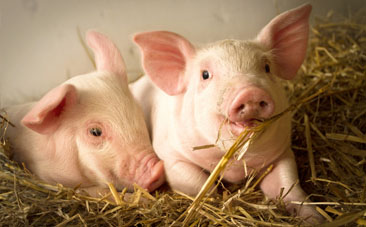

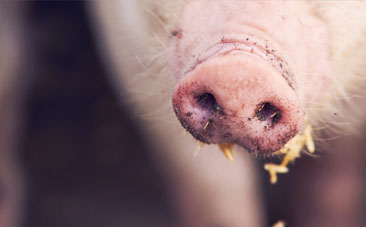
SPECIFIC REQUIREMENTS OF THE ANIMAL WELFARE CHAIN
ANIMAL WELFARE OF THE OPAS SUPPLY CHAIN
Opas has decided to differentiate itself by adopting more restrictive animal welfare rules than the reference legislation. This is certified according to a technical document DT40 by Kiwa.
BIOSAFETY
A fundamental element to be respected in farms for maintaining a good sanitary level is the high standard of biosecurity and hygiene inside and outside the farm.
For this reason, all strategies have been implemented to protect the farm from infections coming from outside and, at the same time, to control the spread of infections within the facility itself.
RESPONSIBLE USE OF MEDICINES
The use of antimicrobials remains, for veterinarians, a fundamental tool for the care and well-being of animals. However, their use must not ignore contexts related to the onset of resistance phenomena, which can reduce the effectiveness of drugs. This necessarily leads to avoiding their abuse and ensuring their responsible use.
To achieve this, the use of certain critically important molecules, judged by the World Health Organization (WHO) to be contributing to antibiotic resistance, is prohibited.
STAFF INVOLVED
Farmers are trained in the correct management procedures and good practices in farming. This training is formalized with appropriate documentation.
Transporters are equipped with authorizations/certificates required by the relevant regulations. Additionally, they are trained on important aspects of pig management from loading at the farm, transportation, to unloading, through dedicated operational instructions.
Personnel responsible for handling animals are properly trained and made aware, with the aim of ensuring animal welfare through their conduct.
SELF-MONITORING PLAN
A sampling plan is established in order to verify and ensure the quality of the feed used for farmed animals.